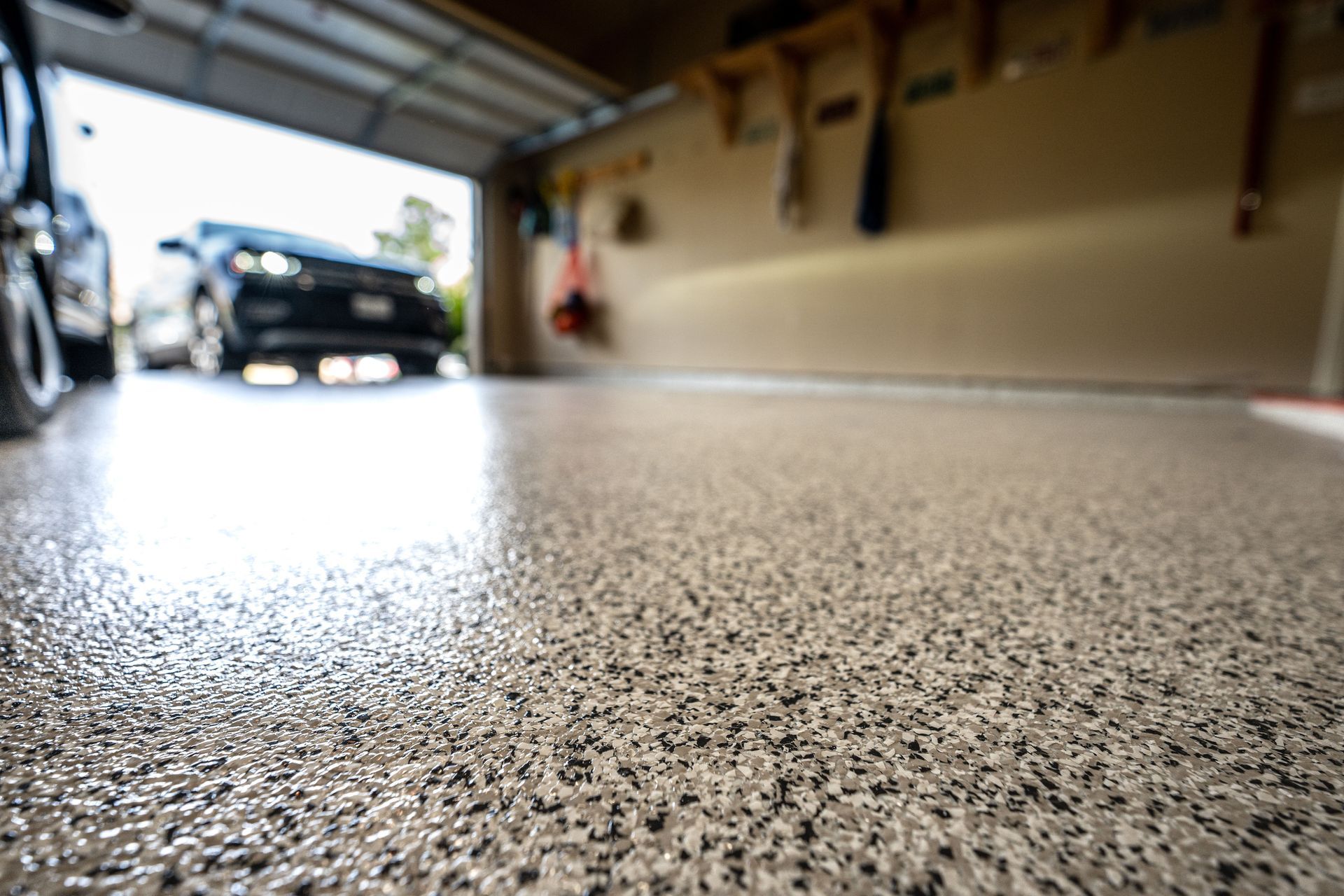
An epoxy floor is one of the toughest surfaces you can put over concrete, but no coating lasts forever on its own. Some floors still look glossy and new after well over a decade, while others start peeling, yellowing, or bubbling within a few seasons. The difference rarely comes down to luck. It comes down to a handful of factors that start before the first coat goes down and continue for as long as the floor is in use.
Whether you're coating a garage, a basement, a showroom, or a warehouse, understanding these factors helps you make smarter choices from day one. It also explains why the epoxy flooring service you choose matters just as much as the product itself. Below, we break down the biggest influences on how long an epoxy floor lasts and what you can do to get the most out of yours.
The Type of Epoxy Used
Not every product sold as epoxy performs the same way, and the formula you choose sets the ceiling for how long your floor can last. According to This Old House, solvent-based and solid epoxy systems can hold up for as long as 20 years, while water-based versions may need a fresh application every one to three years. That gap is enormous, especially when you consider the cost and disruption of recoating a floor again and again.
Water-based and thin-mil coatings are popular in DIY kits because they're easy to apply and inexpensive upfront. However, they go on in a very thin layer and lack the build needed to resist impacts, hot tires, and abrasion over time. Higher-solids systems create a thicker, more resilient layer that bonds tightly to concrete and stands up to daily wear.
The layers on top matter too. A complete system might include an epoxy base coat, decorative flakes or metallic pigments, and a protective topcoat, each playing its own role in durability. When you work with a professional epoxy flooring service, you get a system matched to your space instead of a one-size-fits-all product off a store shelf.
The Quality of Surface Preparation
If there's one factor that makes or breaks an epoxy floor, it's surface preparation. Epoxy needs a clean, open, properly profiled surface to grab onto. When concrete is coated without that preparation, the bond is weak from the start, and the floor is far more likely to peel, flake, or lift in sheets.
Many low-cost installers skip mechanical grinding and rely on acid etching or a quick cleaning instead. That shortcut may save a few hours, but it leaves behind contaminants, old sealers, and a smooth surface that coatings struggle to adhere to. In our experience, most epoxy floors that fail within the first year or two trace back to poor preparation rather than a bad product.
A thorough epoxy flooring service starts with diamond grinding to open the pores of the concrete. Cracks, chips, and pits are filled, and the surface is ground again so everything is level and uniform. This step takes time and specialized equipment, which is exactly why it's worth leaving to professionals. Ask any epoxy flooring service you're considering how they prepare the slab, because their answer will tell you a lot about how long your floor is likely to last.
The Amount of Foot and Vehicle Traffic
How a floor is used day to day has a major impact on its lifespan. A residential basement with light foot traffic faces very different demands than a busy auto shop or a warehouse with forklifts rolling across it all day. The more weight, friction, and impact a floor absorbs, the faster its top layer will wear.
Garages present their own challenges. Hot tires can soften and lift weaker coatings, a problem often called hot tire pickup. Dropped tools, floor jacks, and road salt dragged in during winter all add stress. In commercial and industrial settings, heavy equipment, pallet jacks, and constant foot traffic create even more abrasion.
The key is choosing a system built for the conditions it will face. Industrial and commercial floors benefit from thicker builds and tougher topcoats, while decorative flake systems add texture and help hide everyday wear in garages and basements. A knowledgeable epoxy flooring service will ask how you use your space before recommending a system, rather than applying the same coating to every project. Matching the floor to the traffic it carries is one of the simplest ways to extend its life.
The Level of UV and Sun Exposure
Sunlight can be surprisingly hard on epoxy. Standard epoxy isn't UV-stable, so floors that receive direct sunlight through open garage doors, windows, or skylights can begin to yellow over time. While this discoloration is mostly cosmetic, it can make a floor look older than it is and eventually lead to a chalky, faded surface.
This is one reason a topcoat matters so much. Polyaspartic topcoats are designed to resist UV exposure, so they help keep colors crisp and the finish clear even in bright spaces. They also add a layer of protection against chemicals, stains, and abrasion, which takes some of the burden off the epoxy beneath.
Changing weather plays a role as well. In northern Illinois, garage floors deal with freezing temperatures, summer heat, and slush loaded with road salt. A coating system selected with local conditions in mind will hold up far better than one chosen purely on price. When comparing options, ask whether the epoxy flooring service includes a UV-resistant topcoat as part of the system.
The Presence of Moisture Beneath the Slab
Moisture is one of the most overlooked threats to an epoxy floor, largely because you often can't see it. Concrete is porous, and even a slab that looks completely dry can have water vapor moving up through it from the ground below. Over time, that vapor builds pressure underneath the coating.
When moisture gets trapped beneath epoxy, the results can include bubbling, blistering, and delamination, where the coating separates from the concrete. Basements and older slabs without a vapor barrier underneath are especially prone to this problem. Unfortunately, by the time the damage shows up, the only real fix is often removing and replacing the coating.
The solution is to address moisture from the start. A moisture-vapor barrier epoxy base coat helps block vapor from pushing up into the system, protecting the layers above. Slower-setting epoxy base coats also have more time to penetrate and bond with the concrete, which further improves durability. An experienced epoxy flooring service will evaluate the slab's condition and recommend moisture protection where it's needed instead of hoping the problem never appears.
The lifespan of an epoxy floor isn't set by any single factor. It's shaped by the product you choose, the care taken during preparation, and the conditions the floor faces. Get these details right, and your floor can look great and perform well for a very long time. Get them wrong, and you could be dealing with peeling, yellowing, or bubbling far sooner than expected.
If you're ready for a floor built to last, we're here to help. At AA Construction Concrete Coatings, we provide a complete
epoxy flooring service backed by detailed diamond-ground preparation, moisture-vapor barrier base coats, and UV-resistant polyaspartic topcoats. Our family has been in business since 1957, we never use subcontractors, and we stand behind our work with a limited lifetime warranty. Contact us today for a free custom quote.